The short answer
Most visitors come to Valencia for one dish and leave having eaten it once, often badly, at dinner on a tourist terrace. The city deserves better. Its food runs from a tiger-nut drink you will not find done as well anywhere else, through a mid-morning sandwich ritual, to a whole family of rice dishes of which paella is only the best known.
We curate three food-led experiences in Valencia, and they do different jobs. The old town tour with wine and tapas (around EUR 72, four hours) is the evening: history first, then a long seated table. The paella class with a Ruzafa market visit (around EUR 65, three and a half hours) is the hands-on morning. And the Albufera eco boat tour (about USD 69, four hours) takes you to the lagoon and rice fields where paella was born. Book one of the first two, not both on the same day, and add the Albufera if you have a spare afternoon.
Where paella actually comes from
Paella is a country dish before it is a city one. It grew up in the rice-growing land around the Albufera, the freshwater lagoon just south of Valencia, where farm workers cooked rice in a wide, shallow pan over a wood fire with whatever was to hand. The version Valencians defend today, paella valenciana, still reads like that: rice, chicken and rabbit, flat green beans and large white beans, sometimes snails, with saffron and olive oil. The prized part is the socarrat, the thin toasted layer that forms on the bottom of the pan.
Three things follow for a visitor. Paella is traditionally a lunch dish, often a weekend family one, so a restaurant serving it at nine in the evening is usually cooking for tourists. A real paella is made to order and takes time, so a place that brings one in ten minutes probably did not. And the seafood rice you may know from elsewhere is a different dish in Valencia, with its own names. Our paella class guide compares the classes we curate in four cities, and the Valencia one is the one we would pick.
What else to eat
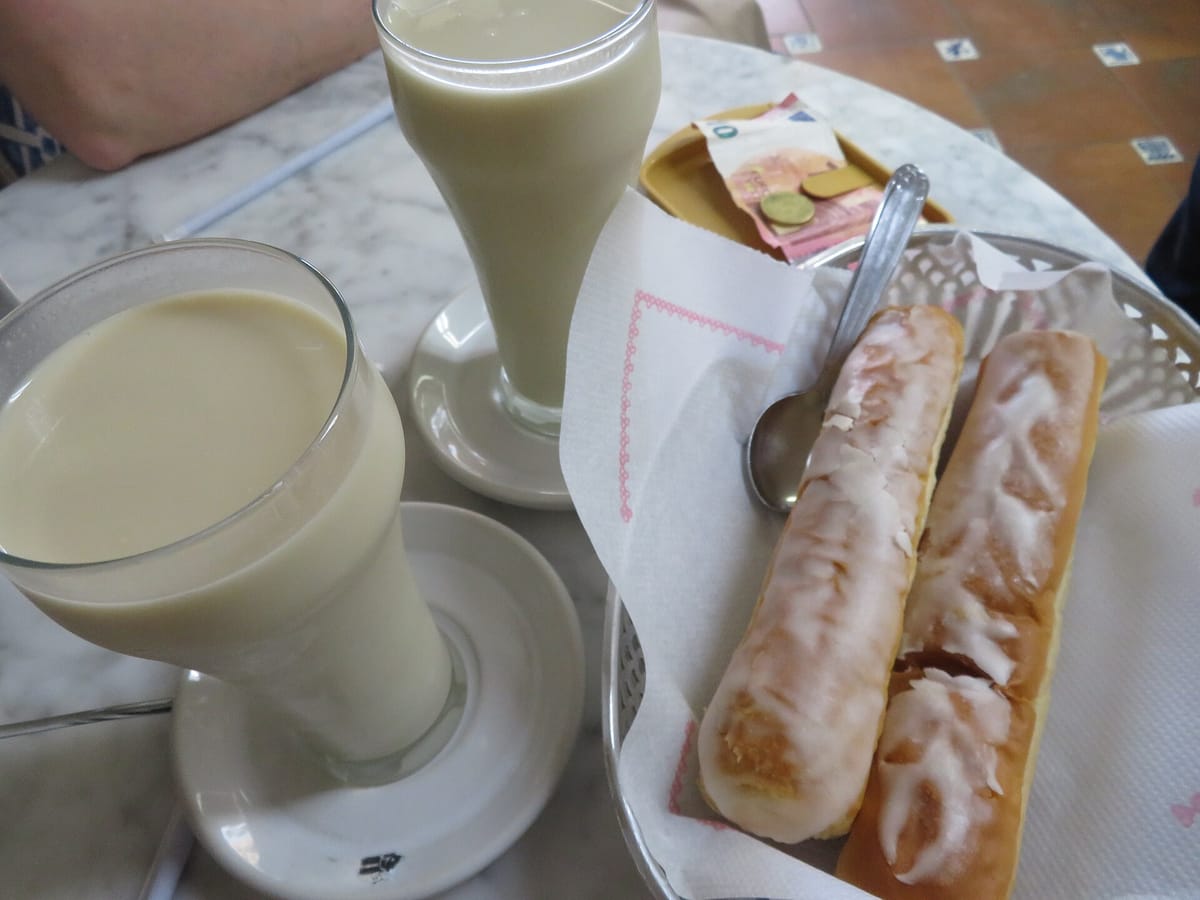
- Horchata and fartons. Horchata (orxata in Valencian) is a cold, sweet, milky drink made from tiger nuts, a small tuber grown around Alboraia, just north of the city. It comes with fartons, long, soft, sugar-glazed buns made for dipping. Order it at a traditional horchateria rather than a cafe chain; it is an afternoon thing, and best in the warm months.
- The esmorzaret. Valencia's mid-morning almuerzo is a ritual: a large filled bocadillo, a drink, a small dish of olives or peanuts, and a coffee to finish, often a cremaet, coffee with rum flamed with sugar and spices. Bars that serve workers do it best, usually from about nine to eleven.
- The other rice dishes. Arroz a banda (rice cooked in fish stock, the fish served apart), arroz negre (black with squid ink), and fideua, made with short noodles instead of rice and associated with Gandia, down the coast.
- All i pebre. Eel and potato stew with garlic and paprika, the Albufera's other great dish. The restaurants of El Palmar, the village in the middle of the lagoon, are known for it.
- Agua de Valencia. Not water: a jug cocktail of orange juice and cava with spirits. Pleasant, stronger than it tastes, and best shared.
The old town wine and tapas tour
Food & wine · Valencia
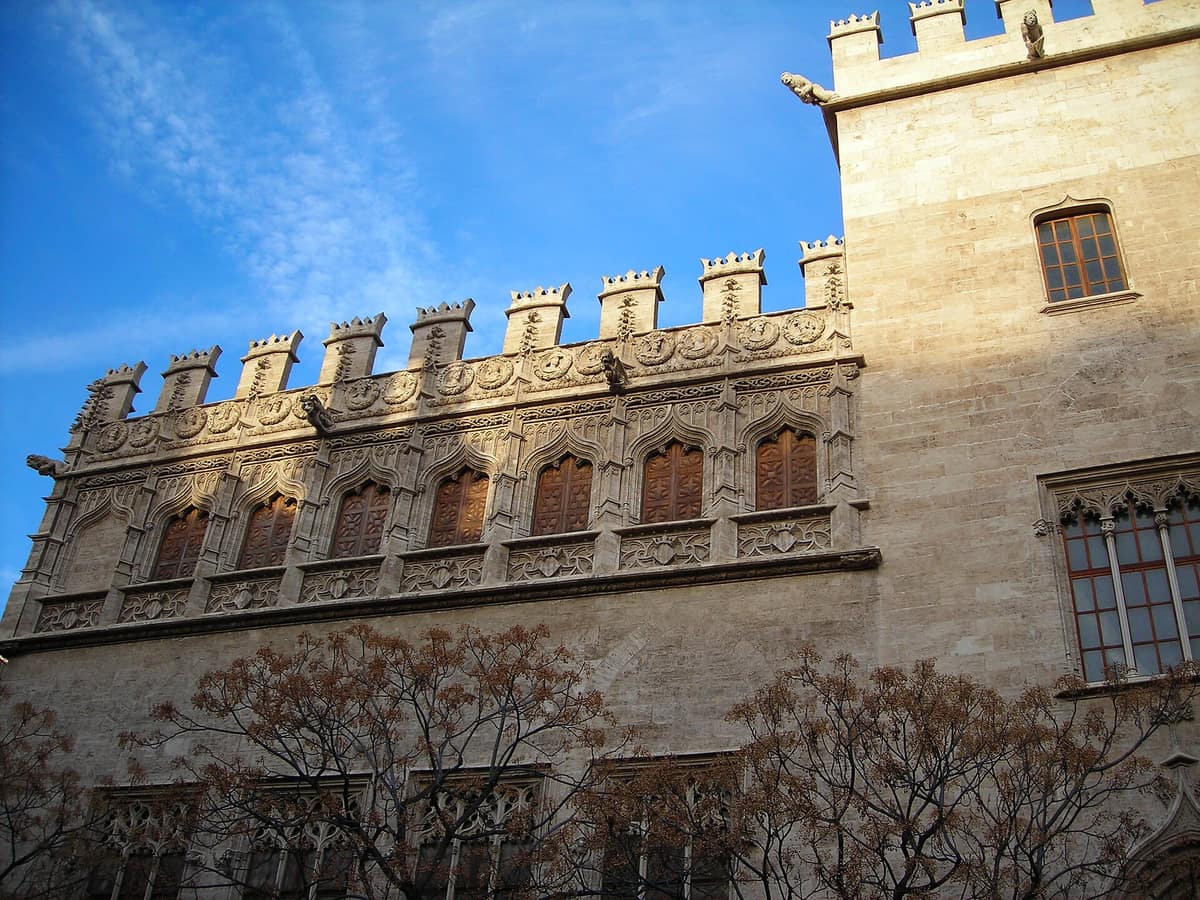
Old Town Tour with Wine and Tapas in an 11th-Century Monument
An Old Town walk that ends with ten tapas courses and paired wines inside an 11th-century building. Valencia's most distinctive food evening.
This is the tour to book if you want one food evening in Valencia and you would rather sit than walk from bar to bar. It starts with a guided walk through the old town, the cathedral, the silk exchange and the older lanes, and ends inside an eleventh-century building at a long table of tapas courses with paired local wines. It is not a crawl: you settle into one place for the eating part, which makes it a good fit for groups with mixed walking stamina and a poor one if you wanted to see several bars.
At around EUR 72 for four hours with a full dinner and wine included, the price is fair for what it covers. Arrive hungry. Before you book, read the itinerary on the booking page to confirm the venue and menu for your date, since operators adjust both. For how this compares with food tours in other cities, our guides to food tours in Madrid and eating in Granada use the same yardstick.
The Albufera at sunset
Outdoors & water · Valencia
Albufera Natural Park Eco Boat Tour with Transfer
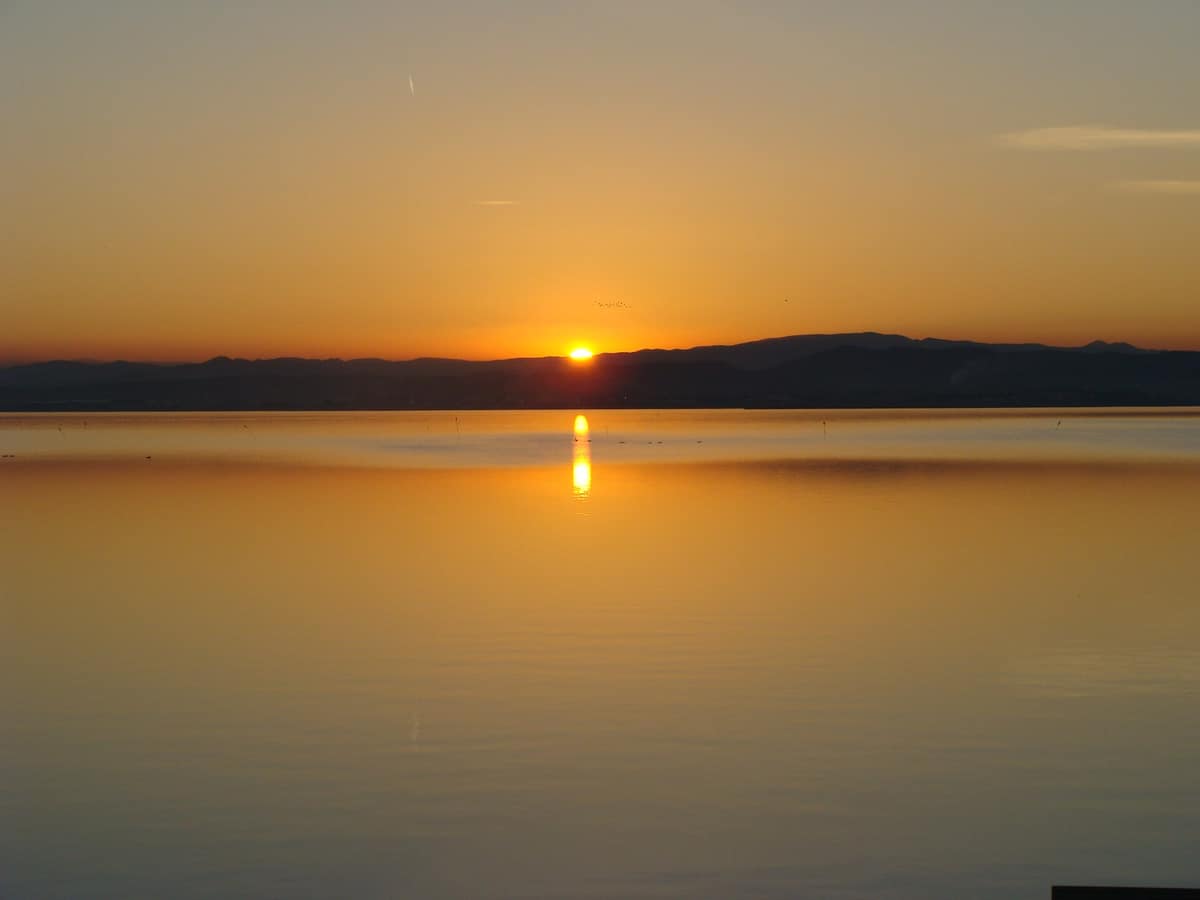
A silent electric boat on the lagoon where Valencia's rice grows, with a traditional barraca visit and city transfer. The sunset departures are the ones to book.
If paella is the reason you came, the Albufera is the place that explains it. The lagoon sits about ten kilometres south of the city, ringed by rice paddies, fishermen's channels and traditional thatched barraca farmhouses. The tour we curate collects you in the city, crosses the lagoon on a quiet electric boat, visits a barraca, and brings you back after dark.
Book the sunset departure. The light at dusk is the point; at midday the lagoon is hot, flat and much less memorable. When we last checked in July it held 4.6 across roughly 700 reviews at about USD 69 for four hours, but we have not re-verified this listing since, so check the live price and time before booking. If you want to eat in El Palmar afterwards, plan it separately: our listing records no meal as part of the tour.
Eating on your own
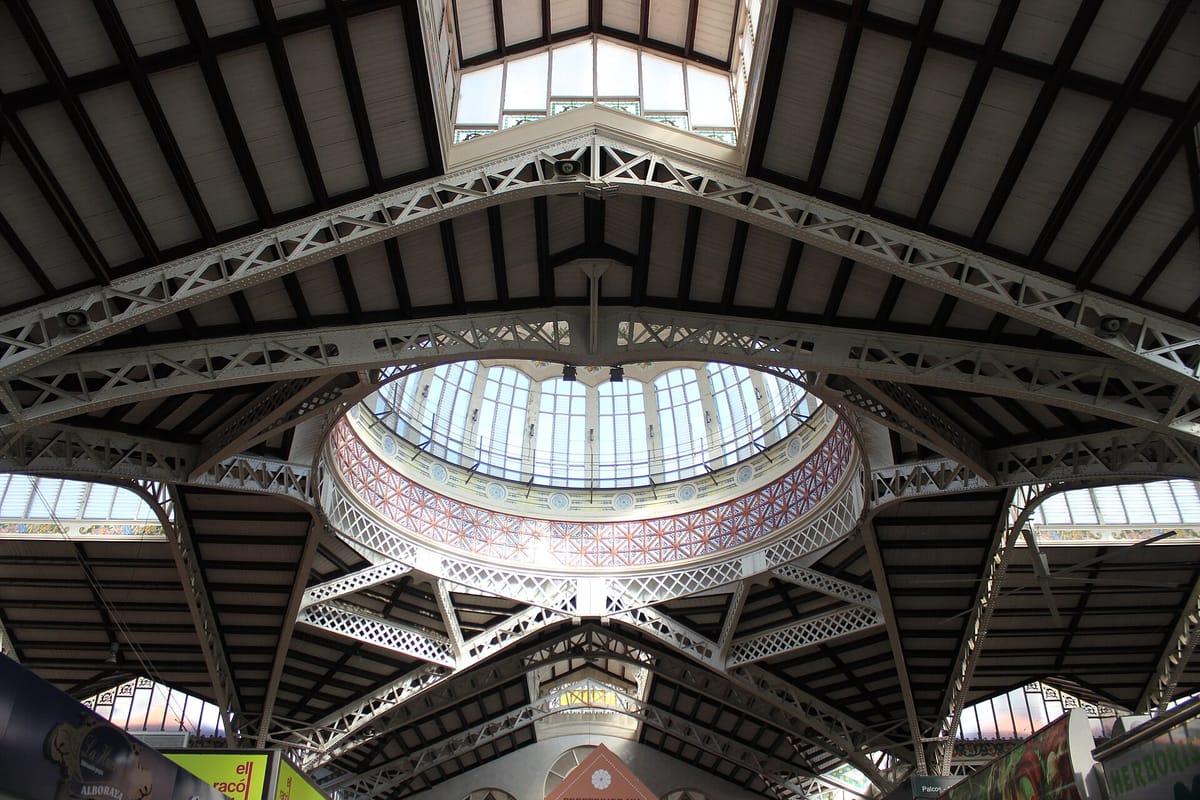
Valencia is an easy city to eat in without a guide once you know the rhythm. Go to the Mercado Central in the morning, when the stalls are full; it closes on Sundays, so check hours before you plan around it. Take the esmorzaret mid-morning, eat rice at lunch, have horchata in the late afternoon, and save tapas for the evening, in the lanes of El Carmen in the old town or in Ruzafa, the barrio south of the centre with the market where the paella class shops. The Cabanyal, the old fishermen's quarter by the beach, is worth an evening too, and it is where the Palosanto flamenco show is staged.
If you only have time for one booked food experience, make it a daytime one, because Valencia's best eating happens before dark. Browse every curated food and wine excursion across Spain if you are comparing cities.
A simple plan for two days
Day one. Mercado Central in the morning, esmorzaret at a local bar, the paella class with the Ruzafa market visit as your lunch, horchata and fartons in the late afternoon, and an early night.
Day two. The old town on foot in the morning, a rice dish that is not paella for lunch, the Albufera boat at sunset, or, if you would rather stay in the city, the old town wine and tapas tour as your evening.
For the rest of a Valencia trip, including the Oceanografic and a day inland, see our three days in Valencia plan. Prices, durations and review figures on this page are as of our 2026 curation; check the live listing before you book.