The short answer
We curate 55 excursions across eight Spanish destinations and six categories. Every one of them carries a price we recorded, a rating, and a review count, and between them they sit on 308,463 guest reviews. That is a small catalogue but a well-documented one, and putting it in a single table produced a result we did not expect and did not much want to publish, given that we earn a commission on the bookings.
The cheaper an excursion in Spain is, the worse it tends to be rated. Not dramatically, and not without exceptions, but consistently, and along a clean line. The cheapest way to buy an experience in Spain is to buy one with no guide and a large group, and those are precisely the products guests come back least happy with.
The median excursion in our set costs about $66 per person. The bottom of the range is $13 and the top is $186. But the median is nearly useless on its own, because what you are buying matters far more than where you are buying it, and the spread within a single city is wider than the spread between cities.
What things actually cost
Prices below are the per-person starting price recorded in July 2026, normalised to US dollars. They are a snapshot of a moving market and should be read as bands rather than quotes. The method section explains exactly how they were captured and the one real weakness in them.
Across all 55: median $66, range $13 to $186. Half of everything worth booking in Spain sits between roughly $40 and roughly $90 per person, which is a more useful sentence than the median. Below $30 you are almost always buying an entry ticket or a show seat rather than a guided experience. Above $120 you are almost always buying small-group access to something with a limited daily capacity.
Category beats city
Sorted by median price, cheapest first, with the mean guest rating alongside:
Evening and shows, $29, mean rating 4.71 across 8 products. Mostly flamenco tablaos, and the cheapest real experience category in Spain. Tickets and monuments, $40, mean rating 4.65 across 11. Timed entry to the Alhambra, the Sagrada Familia, the Alcazar, the Prado. Culture and workshops, $52, mean rating 4.83 across 7. Cooking classes and guided neighbourhood walks. Outdoors and water, $69, mean rating 4.70 across 8. Kayaking, catamarans, the Caminito del Rey. Day trips, $74, mean rating 4.69 across 10. Coaches to Montserrat, Toledo, Ronda, the Alpujarra. Food and wine, $84, mean rating 4.89 across 11. The most expensive category in Spain and the best rated, by a clear margin at both ends.
That is a spread of nearly three to one from the cheapest category to the dearest, against a spread of about two to one between the cheapest and dearest cities. If you are budgeting a trip, deciding what kind of days you want is a bigger financial decision than deciding which city to have them in.
The finding: price and rating move together
Look at the two ends of that list. The dearest category, food and wine, is the highest rated at 4.89. The category with the lowest mean rating, tickets and monuments at 4.65, is the second cheapest. Culture and workshops sits third-cheapest and second-highest rated, which is the one clean break in the pattern, and we come back to it below.
The relationship is sharper if you ignore category entirely and sort by how the product is run. This, for us, is the actual finding:
Self-guided products: median $26, mean rating 4.60, 8 of them. Large-group products: median $56, mean rating 4.67, 16 of them. Small-group products: median $81, mean rating 4.82, 31 of them.
Both columns rise together, monotonically, across all three tiers. Roughly a threefold increase in price buys about 0.22 of a rating point, which sounds trivial until you consider that the entire usable range of a five-point travel rating is about 4.4 to 5.0. On that scale, 0.22 is most of the distance between a product people tolerate and one they recommend.
There is a related pattern in review volume. Across the set, the correlation between how many reviews a product has and how well it rates is negative, at about −0.34. The most-booked things in Spain are, on average, the least satisfying ones. Tickets and monuments products average nearly eighteen thousand reviews each and rate worst; food and wine products average around thirteen hundred and rate best.
Why. It is group size
We think the mechanism is unglamorous and almost entirely about the ratio of guests to guides.
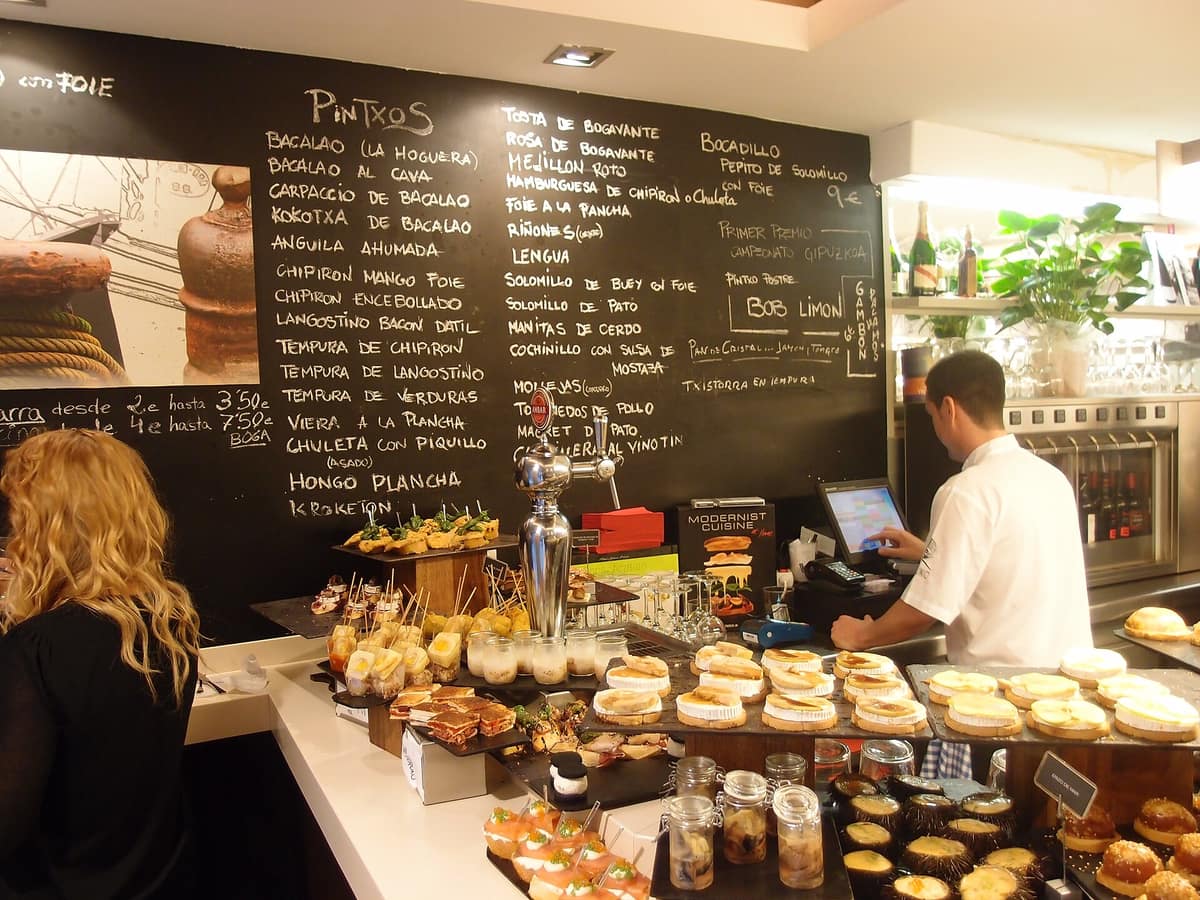
A pintxos tour with eight people is a conversation. The guide can adjust to the group, answer the actual question asked, and change the last bar because someone mentioned they do not eat fish. A coach day trip with fifty people is a logistics exercise, and the guide's job is largely to prevent it from failing. Both can be excellent, but only one can be personal, and guest ratings reward the personal one. Our San Sebastian pintxos guide is the clearest case of this in the whole catalogue.
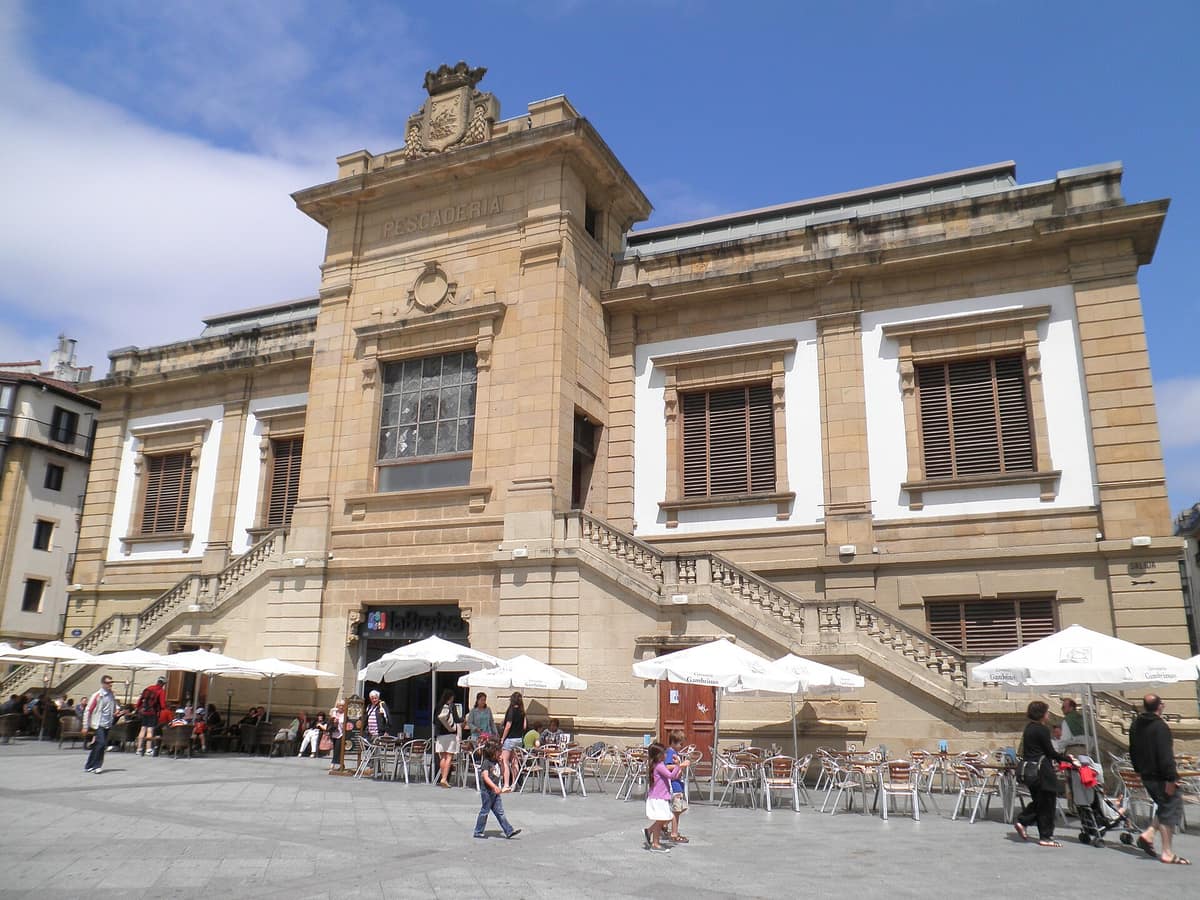
Food & wine · San Sebastián
Premium Pintxos, Wine and Market Foodie Tour
A market visit plus the premium end of the pintxos spectrum with serious wine. Priced for it, at around EUR 145 per person.
This is the single highest-rated product we curate anywhere in Spain: a perfect 5.0 across several hundred reviews, small group, and among the most expensive things in the set. It is also, on the numbers, exactly what the pattern predicts.
Price follows the same driver rather than causing the outcome. Small groups cost more to run per head because a guide's day is divided among fewer people. So the price and the rating are both downstream of the same decision, which is why they move together, and why paying more is a reasonable proxy for satisfaction without being the cause of it. Spending more on a badly run small-group tour will not save you.
The exception that proves it: entry tickets
The tickets and monuments category deserves a defence, because reading it as the worst value in Spain would be a mistake, and the numbers invite that reading.
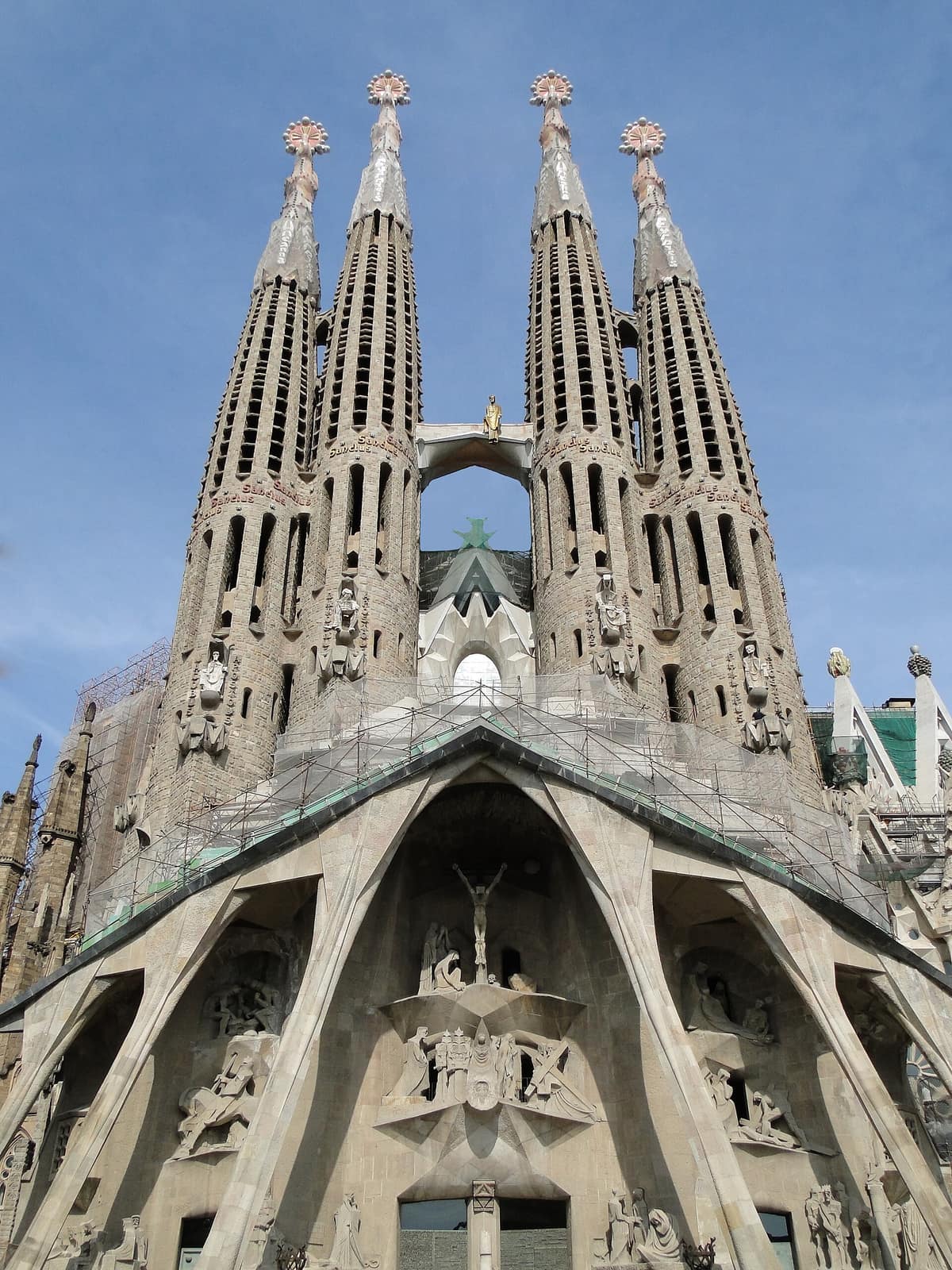
Tickets & monuments · Barcelona
Sagrada Família Entry Ticket with Audio Guide
Timed entry to Gaudí's basilica with a 16-language audio guide. On-site ticket sales are unreliable, so booking ahead is not optional; note the towers are a separate ticket.
A timed entry ticket is not an experience product. Nobody is guiding you, nobody is adjusting to your group, and the thing you came for is the building. When guests rate a Sagrada Familia or Alcazar ticket, they are largely rating a queue, an app and a turnstile, and a 4.6 on a turnstile is a good score. It is measuring a different thing from a 4.9 on a cooking class.
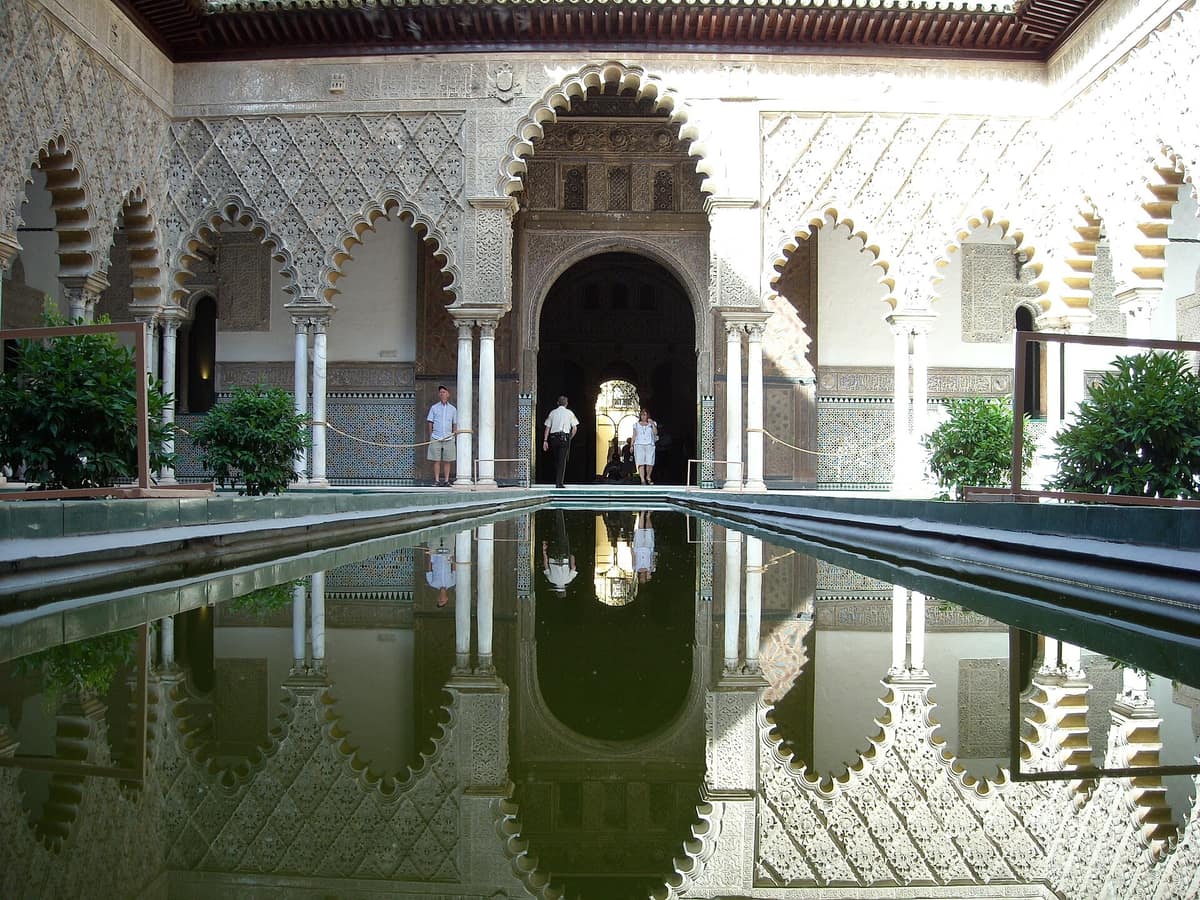
Tickets & monuments · Seville
Royal Alcázar Timed Entry Ticket
Timed self-paced entry to Seville's Mudéjar palace complex. The palace's own site sells it cheaper at EUR 15.50 but sells out days ahead; this is the flexibility play.
There is also a selection effect worth naming. These are the highest-volume products in Spain by an order of magnitude, and volume drags averages down: more bookings means more first-time bookers, more people who misread what was included, and more reviews written on a bad day. The Seville Alcazar ticket alone carries over thirty thousand ratings. Any product with that many reviews is being rated by a broader and less self-selected population than one with four hundred.
So the honest reading is narrower than the headline. Cheap guided experiences tend to disappoint. Cheap entry tickets are usually just cheap. If a monument is the point of the day, buy the ticket, skip the upsell, and put the money you saved into an evening with a small group in it.
The eight cities, ranked by price
Median price per person, cheapest first, with the destination's mean rating:
Seville $51 (4.71) · Madrid $52 (4.71) · Granada $62 (4.77) · Valencia $63 (4.82) · Barcelona $64 (4.71) · Mallorca $68 (4.63) · Malaga and the Costa del Sol $69 (4.77) · San Sebastian and the Basque coast $110 (4.84).
Two things stand out. The first is that Barcelona is not expensive, which surprises most people. At a $64 median it sits mid-table, below Malaga. Barcelona is an expensive city to sleep and eat in, and that reputation does not transfer to its excursion market, which is enormous, competitive and priced accordingly.
The second is San Sebastian, at more than double Seville. That is not a Basque price premium so much as arithmetic: four of its seven curated products are food and wine, the most expensive category in Spain, because that is genuinely what the region is for. Its 4.84 mean rating is the highest of the eight, which is the same trade appearing at city level. If you want the Basque coast cheaply, the answer is not a cheaper pintxos tour, it is to do the region's walking and museum days as your paid excursions and eat independently.
Where to spend and where to save
The practical conclusion, stated as we would give it to a friend.
Spend on the food day. It is the best-rated category in Spain by a clear margin, at 4.89, and the gap between a good one and a cheap one is the widest gap in this entire dataset. If a trip has one splurge in it, the evidence says put it here.
Save on entry tickets. Buy the plain timed ticket, book it early because that is a supply problem rather than a price one, and do not pay for a guided version of a monument unless the guiding is the thing you want. Our Alhambra guide works through the one case where that calculation genuinely goes the other way.
Be careful in the middle. The $50 to $70 band is where large-group day trips live, and it is the widest quality range in the set. A coach day can be superb or it can be eleven hours of being counted. Read the review count and the group size before the price.
And treat cheap guided experiences with suspicion, not enthusiasm. A $25 guided tour in a major Spanish city is priced that way because the group is large enough to make the economics work, and the ratings in this set say guests notice.
How we got these numbers
Everything above comes from our own curated catalogue rather than a platform-wide export, so the method matters and the weaknesses belong in the open.
The set. 55 excursions across eight destinations and six categories, six or seven per destination, selected by us as the ones worth booking. Prices, ratings and review counts were captured in July 2026 from GetYourGuide (48 products) and Viator (7). Both use a five-point rating scale, so ratings are directly comparable. Prices are the per-person "from" price, which is the lowest available option and typically the low-season, largest-group variant.
The currency problem, which is the real weakness. Our capture recorded 37 products in US dollars and 18 in euros, and the split falls by capture session rather than by product: whole destinations came back in one currency. Barcelona is entirely in euros, Seville and Granada entirely in dollars. Left unconverted, that would have made euro-captured cities look about 16 percent cheaper than dollar-captured ones for no real reason, and Barcelona's mid-table position would have been an artifact rather than a finding. We have therefore converted all euro figures to dollars at 1 EUR = 1.1625 USD, the 2026 average rate. That conversion is an approximation applied to prices captured across several weeks, and it is the single largest source of error in the price figures here. The rating findings, which are the load-bearing ones, are unaffected by it.
Review counts. 39 of the 55 carry counts we verified individually; the remaining 16 are close estimates read from listing pages, and are shown across this site with a "≈" marker. All are rounded by the platforms themselves at high volumes, so the review totals should be read as orders of magnitude and not as counts.
What this does not show
Four limits, and they are real rather than decorative.
This is a curated set, not a sample. We chose these 55 because we thought they were worth booking, which means the whole dataset sits at the good end of the market. A genuine random sample of everything sold in Spain would rate lower across the board, and would very likely show the same pattern more sharply, since the products we excluded were disproportionately cheap large-group ones. But that is a prediction, not a measurement, and we have not made it.
Fifty-five is a small n. The group-size tiers hold 8, 16 and 31 products. The pattern is consistent and it points one way, but a category median built on seven products is a description of those seven products.
Ratings are not quality. They measure expectation met, not value delivered, which is why a turnstile can score 4.6 and why cheap products carry a structural disadvantage: they attract people for whom the price was the reason, and price-led buyers are harder to satisfy.
We earn commission on these bookings. Everything above concludes that more expensive products are better, which is a conclusion that happens to suit us, and you should weigh it accordingly. The counterweight we can offer is that the same dataset says to buy the cheap version of every monument ticket in Spain, which is the lowest-commission advice on this page. How we make money.
Last reviewed August 2026. Prices move with the season and ratings move with volume. We re-check this set on our curation cycle, and this page advances only when someone has actually re-read the numbers rather than the calendar.